By Brian B. French
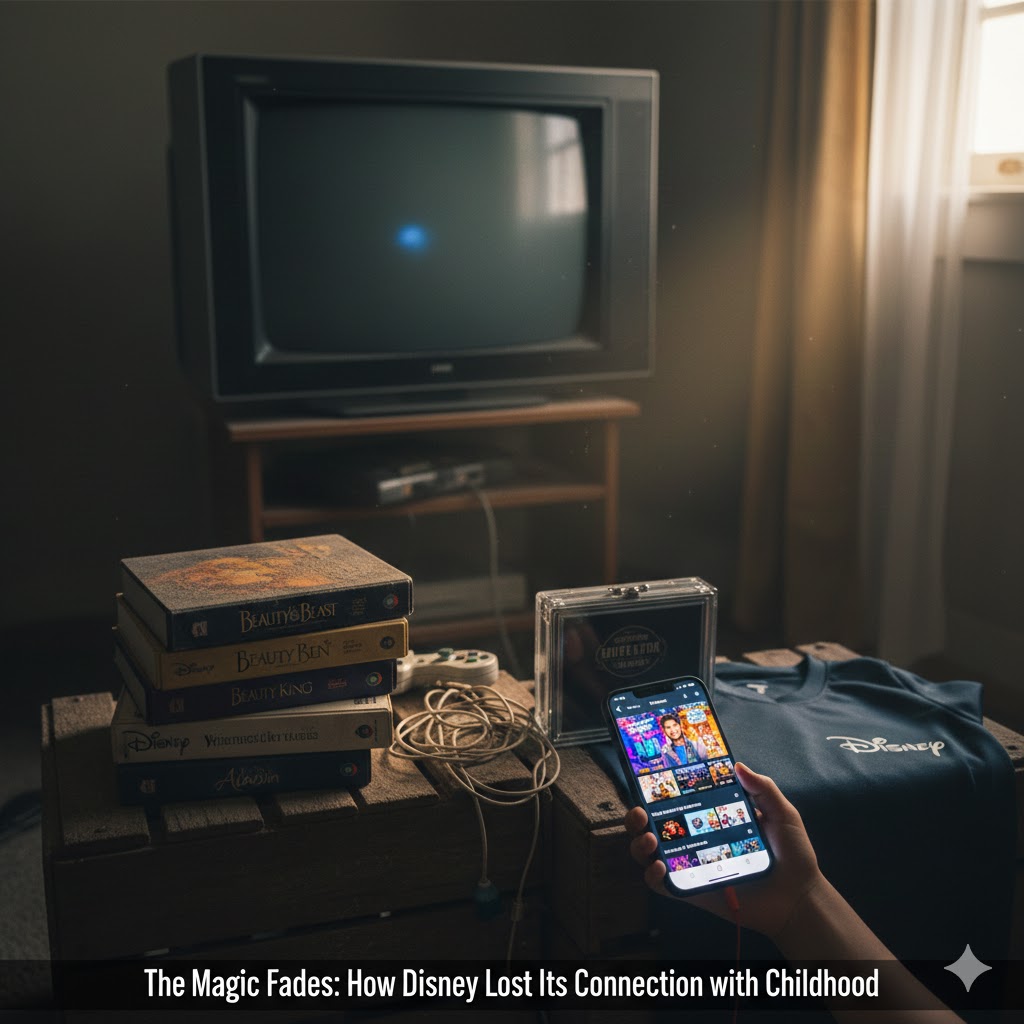
For generations, the Walt Disney Company represented an unbreakable bond with childhood itself. Parents trusted the Disney name implicitly, children recognized the castle logo as a gateway to wonder, and Sunday evenings meant gathering the family around the television for The Wonderful World of Disney. Today, that intimate connection has withered, replaced by a company increasingly focused on nostalgic adults while the children they once captivated scroll past them on smartphones.
Florida Business Stories:
• New Insurer Ignites Optimism in Florida’s Property Insurance Market Amid Stability Surge
• SpaceX Falcon 9 Cleared for Launch Despite Recent Crash Probe
• Tampa Hurricane Home Insurance Dispute Law Firm
• Why Backlinks Matter for Florida Business Marketing
• BoardroomPR Tampa Public Relations Firm
The Sunday Night Ritual
From 1954 through the 1990s, Disney maintained a sacred weekly appointment with American families. The Wonderful World of Disney, in its various incarnations, wasn’t merely a television program—it was a cultural institution. Every Sunday at 7 p.m., Walt Disney himself (and later, his successors) welcomed families into their living rooms, creating a shared experience that spanned generations. Children knew that Sunday meant Disney, and Disney meant quality family entertainment designed specifically for them.
This weekly touchpoint did something crucial: it kept Disney relevant in children’s daily lives. The company wasn’t just producing theatrical films that families saw twice a year; it was a constant, reliable presence. Children grew up with Disney as a companion, not just a brand. The variety format—mixing animated shorts, behind-the-scenes looks at the parks, nature documentaries, and original programming—gave Disney a platform to nurture relationships, introduce new characters, and maintain cultural relevance.
When the anthology series finally faded in the early 2000s, Disney lost more than a television show. It lost its most direct pipeline into family homes, its weekly reminder that Disney existed for children.
The Rise of the Adult Disney Fan
Somewhere along the path from Walt’s death to the modern era, Disney discovered something both lucrative and dangerous: adults would pay premium prices for nostalgia. The company pivoted, slowly at first, then dramatically, toward courting grown-ups who wanted to recapture childhood magic.

Today’s Disney is engineered for millennials and Gen-Xers with disposable income. The parks increasingly cater to childless adults and “Disney Adults” willing to pay $200 for park admission and $300 for a lightsaber experience. The merchandise targets collectors, not children. Limited-edition pins, designer collaborations, and expensive Spirit Jerseys are marketed to adults who treat Disney consumption as a lifestyle identity.
Even the film strategy reflects this shift. The endless stream of live-action remakes—The Lion King, The Little Mermaid, Beauty and the Beast—aren’t made for today’s children. They’re made for the adults who loved the animated originals, marketed with nostalgia-heavy campaigns that promise to recapture feelings from thirty years ago. Today’s seven-year-old has no nostalgic attachment to the 1991 Beauty and the Beast; these films are explicitly designed to extract money from their parents’ memories.
The Disney+ streaming strategy further reveals these priorities. While the platform includes children’s content, much of its promotional energy goes toward Star Wars and Marvel properties that skew toward teens and adults, or nostalgia plays like bringing back The Muppets or creating documentaries about the parks’ history. The company speaks to the child that adults once were, not the children who exist now.
The Animated Decline
Perhaps nothing illustrates Disney’s diminished connection with contemporary children more starkly than the state of animation. Disney invented the feature-length animated film and dominated television animation for decades. Today, when families gather around screens, they’re far more likely to watch Family Guy, The Simpsons, or American Dad—none of which are Disney creations, and all of which are aimed at adults.
This represents a stunning reversal. Animation was Disney’s kingdom, its signature art form, the medium through which it spoke most directly to children. Yet in the prime-time animation landscape that shapes culture and generates water-cooler conversation, Disney is largely absent. Fox’s adult animation dominance (now ironically owned by Disney) speaks to an audience that Disney once would have captured in childhood but has now aged out of the company’s creative focus.
The most successful contemporary animated content for children increasingly comes from other sources: Illumination’s Minions franchise, DreamWorks’ How to Train Your Dragon, or streaming-native content from Netflix and YouTube. When Disney does produce animated hits like Encanto or Moana, their cultural footprint among actual children often pales compared to their memetic status among adult internet users.
The Saturday Morning Collapse
The death of Saturday morning cartoons represents another severed artery in Disney’s connection to children. For decades, Saturday mornings meant waking early, pouring a bowl of sugary cereal, and settling in for hours of animated programming. Disney was a major player in this ritual through both original programming and syndication.
Today, Saturday morning cartoon blocks have virtually disappeared from broadcast television, victims of changing FCC regulations, fragmented audiences, and the shift to streaming. Children no longer have a scheduled, communal viewing experience. They don’t wait for cartoons—they have infinite access, infinite choice, and diminishing attention spans.
Disney failed to adequately replace this scheduled intimacy with a digital equivalent. While Disney+ exists, it’s one platform among many, lacking the appointment-based ritual that built loyalty. A child with unlimited access to content rarely forms the same attachment as one who had to wait until Saturday morning or Sunday night for their Disney fix.
The Smartphone Generation
The most fundamental challenge facing Disney isn’t competition or strategy—it’s the transformation of childhood itself. Today’s children don’t stare at televisions while families gather in living rooms. They stare at smartphones and tablets, consuming personalized, algorithmically-delivered content that bears little resemblance to the shared cultural experiences that built Disney’s empire.
YouTube has become the default entertainment platform for children, not Disney Channel or Disney+. Kids watch individual creators, unboxing videos, gaming content, and short-form videos tailored to their specific interests by machine learning. The very concept of a broad-appeal Disney brand becomes less relevant when every child inhabits a personalized content bubble.
TikTok, YouTube Shorts, and mobile games compete for attention in ways that make a 90-minute Disney film seem like an enormous commitment. The smartphone didn’t just change how children consume content—it changed their capacity for attention, their expectation of personalization, and their relationship with entertainment itself. Disney was built for an era of patient, communal viewing. Today’s children have been trained for quick hits and constant novelty.
The Brand Erosion
The ultimate consequence of these shifts is that the Disney brand itself means less to children than at any point in the company’s history. Ask a seven-year-old in 1985 about Disney, and you’d hear about Mickey Mouse, the castle, Sunday night television, and an implicit understanding that Disney meant quality entertainment made especially for them. Ask a seven-year-old today, and the answer is muddier.
Disney is something their parents care about. It’s the logo before a movie. It’s a place in Florida that’s expensive. The emotional connection—the sense that Disney understands children and creates magic specifically for them—has weakened dramatically. The brand has become diffuse, associated with acquired properties (Marvel, Star Wars) that aren’t distinctly “Disney” in their DNA, or with nostalgic recreations of past glories.
Children today are more likely to form passionate attachments to specific YouTube creators, video game franchises, or streaming shows than to Disney as an overarching brand. Disney has become a corporate entity that owns things children might like, rather than a beloved companion to childhood itself.
The Path Forward?
Disney faces a profound challenge: how do you recapture childhood in an age when childhood itself has been transformed? The company’s focus on adult fans makes financial sense in the short term—grown-ups have more money—but it risks creating a generation of children who never form the emotional bonds that create lifetime fans.
The weekly appointment television that once kept Disney relevant is likely gone forever, a victim of technology and culture. But Disney hasn’t found an adequate replacement for that regular touchpoint with children’s lives. Streaming offers access, not intimacy. Theatrical releases offer spectacle, not companionship.
Perhaps most troubling, Disney seems unsure whether it even wants to prioritize today’s children over yesterday’s. The company’s creative and marketing energy flows toward mining nostalgia and serving established fans. Meanwhile, actual children increasingly find their magic elsewhere—on smartphones, in games, through creators and franchises that speak to their contemporary experience rather than their parents’ memories.
The Walt Disney Company once promised to capture childhood itself, to be there for every child as they grew. Today, that promise feels like another relic of a bygone era, magical in memory but increasingly irrelevant to the smartphone-equipped children scrolling past it, searching for whatever comes next.